Minnesota Landscape Arboretum


Nature Notes

Check out what the Arboretum has to offer! Be the first to hear about or report on what's happening in the prairies, meadow, bog and forest! Matt and Julia always have their eyes and ears open but they can't be everywhere so we count on our visitors to help us out!  Click Here to submit your findings and we'll post the info.

1/29/10 

Nature Notes 1/29/10

David F. Kopperl


Dear Nature Notes friends, as an Arboretum member and volunteer, I’ve always been fascinated with the changing of the seasons.  I’ve been recruited to share what I come across on my regular walks and photo excursions.  I hope you enjoy seeing the Arboretum through my lens.


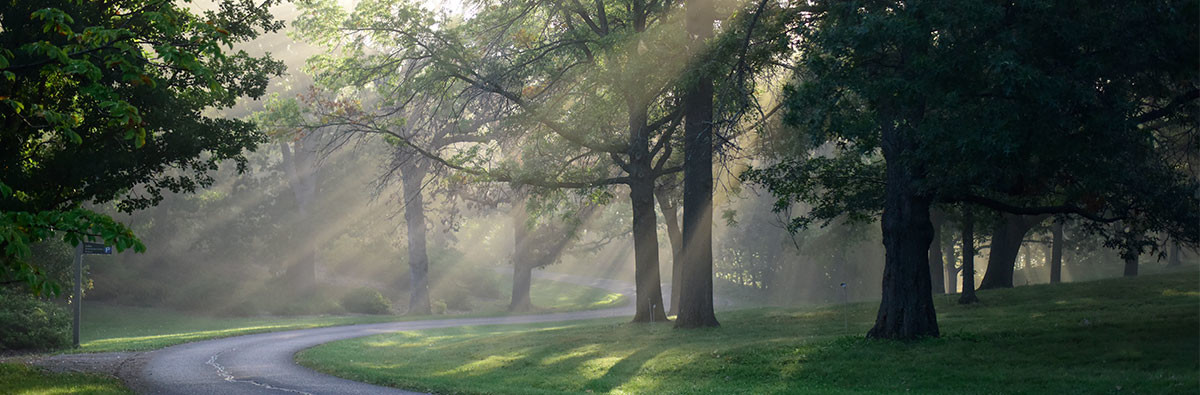
Ice Fog like that above becomes visible when the ground is snow covered and the sun’s radiant energy or above average temperatures fills the atmosphere with moisture.  At night the temperature drops much below freezing and the moisture freezes on trees and plants forming a beautiful scenario.


Since last fall, I have seen a large flock of wild turkeys wandering the grounds.  They often feed near the bird feeders at the rear of the Snyder Building.  I also observed them around mile 2 of the Three Mile drive. 


Late in the fall I drove by the Prairie Plantings on the Three Mile Drive and observed warning signs that a section of the prairie was being burned.  I managed to snap this picture through my car window with a single use camera.  Note the smoke and the flames rising in the center of this picture.  Periodic burning of the prairie helps it come back fuller in subsequent seasons.


I saw this birch log with holes made by woodpeckers and/or other animals   It was located in the woods near the Berens Cabin.  These fallen logs are often infested by borer beetles.


In fall we often see these seeds of the Burdock plant.  They can hitch a ride on our clothing and children have burr fights with them as their clinging hooks (nature’s Velcro) are not too sharp and may be readily handled.  The seeds of burdocks are food for many small winter birds.


This red stem was observed in the woods just off the Berens trail where it intersects the bog trail.  I believe it to be red-panicled dogwood, a shrub fond in wet woods.  It grows from approximately 3 to 15 feet high.  In some locations it is used as an ornamental planting.


One of my favorite sights in fall is oak leaves in shades of magenta and henna.  These were seen on the west side of the Bog trail.  There are many small oaks in this area and it is particularly rich in wine reds and magentas.